ClearCoast Water Filtration · Palm Beach County
Whole-House Water Filtration in Palm Beach County
Better water starts with the right solution.
Explore whole-house filtration, drinking-water systems, and hard-water treatment for your property. Start with your water source, understand your options, and choose a setup that fits your home.
Serving Palm Beach County, Florida. Coverage confirmed per property.

Start here
What would you like to improve?
Pick what you have noticed. These are observations about how water behaves in your home — not evidence of contamination, and not a diagnosis.
Taste or odor
A chlorine smell in the shower or a taste you notice at every tap.
ExploreHard-water scale
Spotting on glass, crust on fixtures, more detergent for the same result.
ExploreDrinking water
Better water for drinking, coffee, cooking and ice at the kitchen sink.
ExploreSediment or staining
Grit at aerators, or rust and dark staining in more than one bathroom.
ExplorePrivate well water
No utility report and no utility monitoring — testing comes first.
ExploreExisting system
A system that needs service, filters, diagnosis or an honest second opinion.
ExploreNot sure which applies? Answer four questions and we'll suggest a starting point — no contact details required.
Compare your options
Five distinct treatment paths
These are different decisions, not tiers of the same product. Here is what each one is for, and where each one stops.
Whole-house filtration
Treats water where it enters the building, so every fixture is included.
Common uses
Chlorine taste and odor, sediment, well pre-treatment.
Limitations
Does not soften water and is not a drinking-water system.
Reverse osmosis
Fine separation of dissolved substances at one tap.
Common uses
Drinking, cooking, coffee and ice at the kitchen sink.
Limitations
Serves one location; sends some water to drain.
Water softeners
Ion exchange removes hardness minerals and reduces scale.
Common uses
Scale on glass, fixtures and water heaters.
Limitations
Does not filter chlorine or sediment; salt-free units do not remove hardness.
Well-water treatment
A designed sequence of stages based on laboratory results.
Common uses
Iron staining, sulfur odor, sediment, low pH.
Limitations
Cannot be specified responsibly without current test results.
Commercial systems
Sized to demand, duty cycle and equipment water specifications.
Common uses
Restaurants, offices, salons, condominium buildings.
Limitations
Not a residential system placed in a commercial building.
Start with your water
How a ClearCoast consultation works
This is the process we propose. It does not include an installation date, because timing depends on scope, permitting and material availability.
- 01
Identify source and goals
Utility supply or private well, and what you actually want to improve.
- 02
Review information and testing
The utility's current annual water quality report, or appropriate laboratory testing for a well.
- 03
Compare suitable options
Only the options that fit the supply, the property and the goals — with limitations stated.
- 04
Confirm scope and pricing
Equipment, installation scope and pricing in writing before anything is scheduled.
- 05
Plan maintenance
Intervals and consumables for your system, so ownership cost is known up front.
Contracting arrangements for licensed trade work are confirmed in writing before scheduling. We do not publish licensing statements that have not been verified.
Point-of-entry treatment
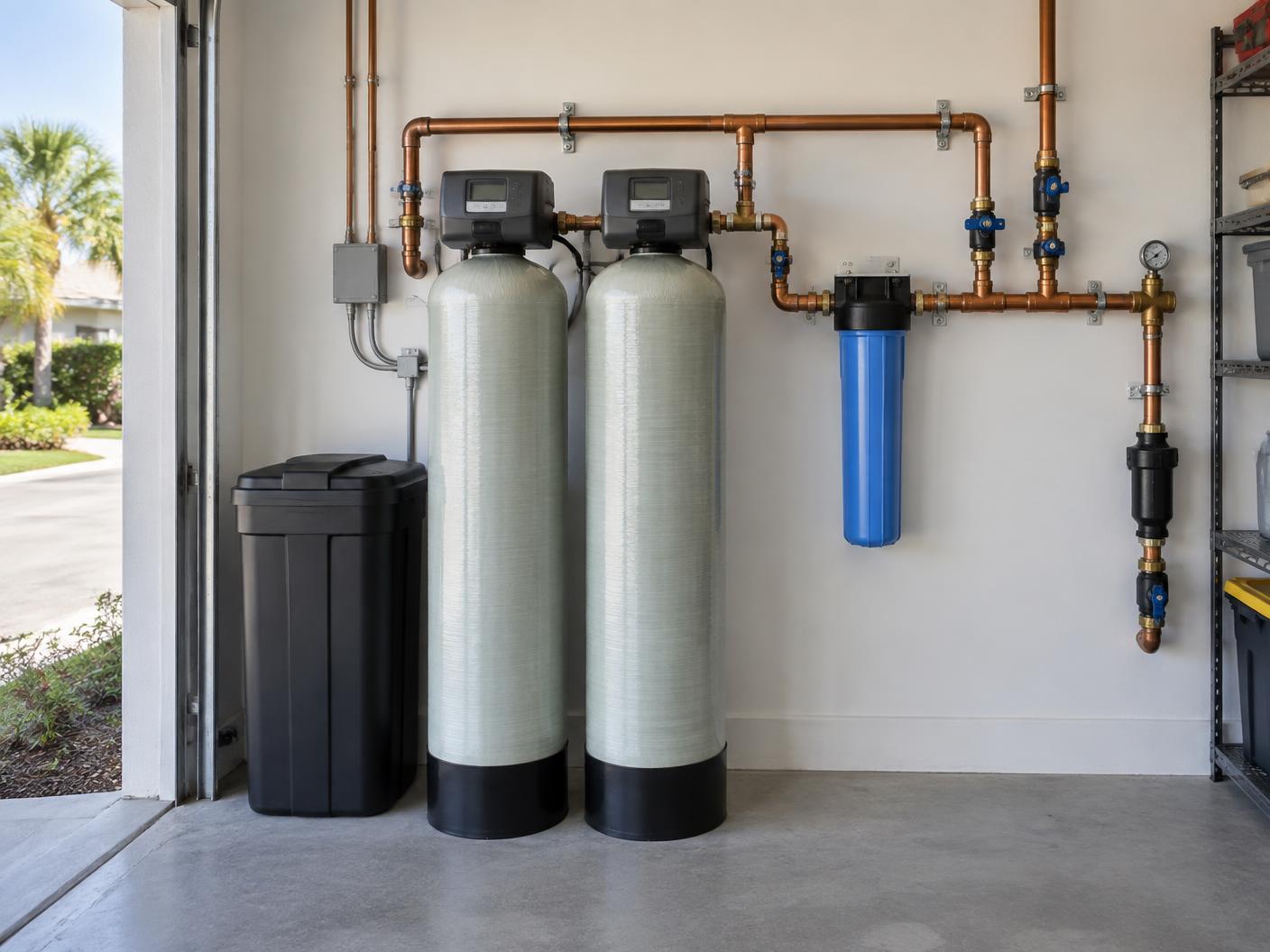
Whole-house filtration, done deliberately
Point-of-entry treatment sits where water enters the building, so showers, laundry and outdoor bibs are included — not just the kitchen. Getting it right is mostly about sizing and sequencing: peak flow demand, the stages your supply actually needs, and space for service access.
- Sized to peak flow and occupancy, not to square footage.
- Media selected for the disinfectant your utility actually uses.
- Bypass designed in, so the property keeps water during service.
- Written maintenance intervals for the media installed.
Two different decisions
Drinking water and hard water are not the same problem
They get bundled together constantly. Separating them is what keeps a recommendation honest — and usually saves money.
Drinking water
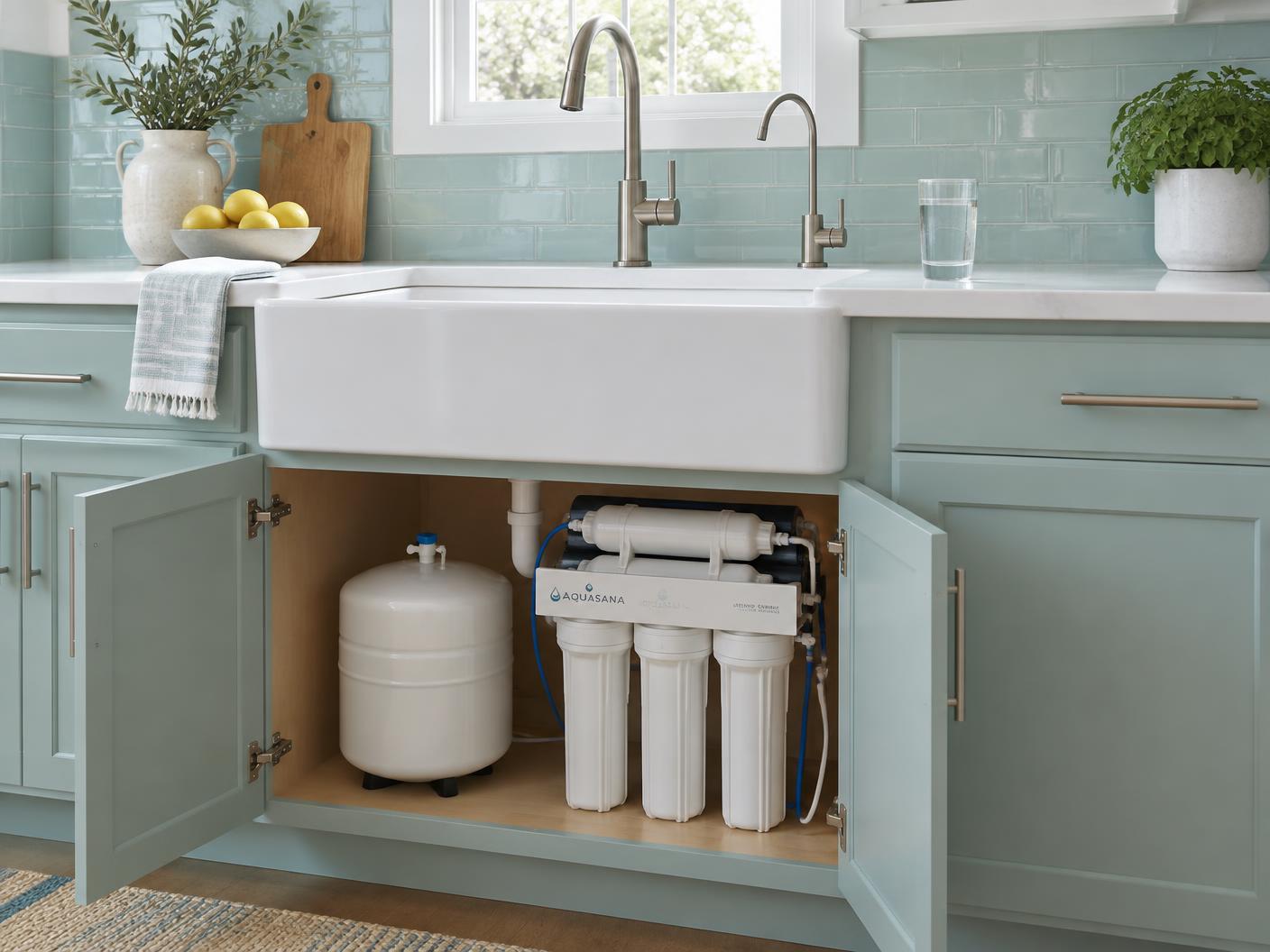
Reverse osmosis at one tap
RO pushes water through a membrane to separate a wide range of dissolved substances. It changes drinking and cooking water noticeably — and it treats one location, not the whole property.
How reverse osmosis worksHard water
Softening versus conditioning
Hardness is dissolved calcium and magnesium. A conventional softener uses ion exchange to remove it. A salt-free conditioner changes how those minerals behave, but a hardness test afterwards still reads hard — which is why we never call a conditioner a softener.
- Ion-exchange softener
- Lowers measured hardness. Needs a drain, power and salt.
- Salt-free conditioner
- Targets scale formation without removing hardness. No salt, no drain.
Local resource
The Palm Beach County water guide
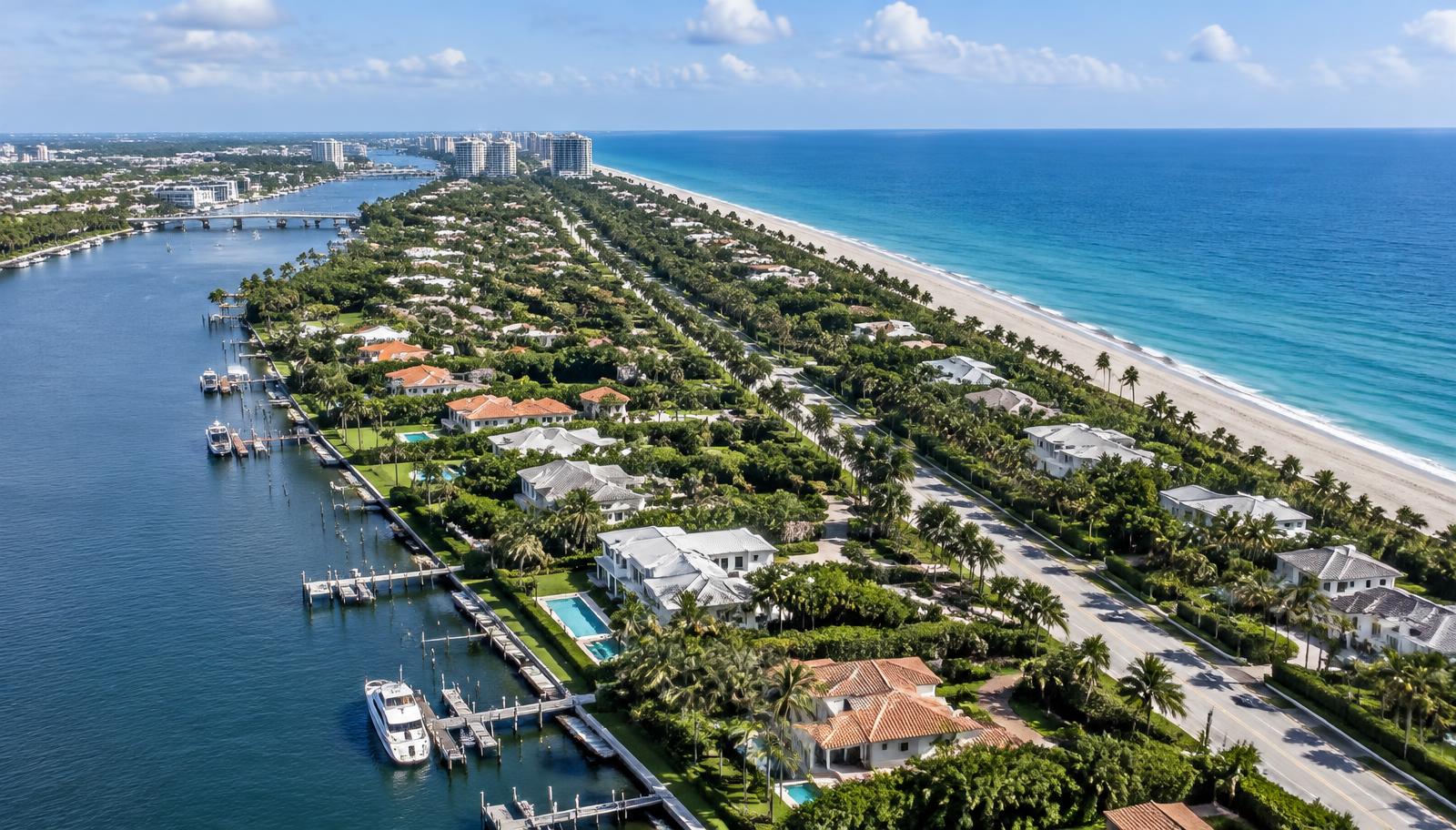
Palm Beach County is served by many different municipal and regional utilities, and a meaningful number of properties are on private wells. Residents do not all receive identical water, and city boundaries do not reliably identify the provider — so our county hub is built around finding the right information for your address rather than making a county-wide claim.
Why ClearCoast
Our service philosophy, stated plainly
ClearCoast is a new brand, so we are not going to claim decades of history or a customer count. What we can commit to is how we work.
Clear explanations
Plain language about what a technology does, what it does not do, and where the limits are.
Tied to the property
Recommendations built from the supply, the plumbing and the household's real demand.
Written scope
Equipment, installation and maintenance expectations documented before purchase.
Accessible follow-up
A named point of contact for service questions after installation.
HALO Water Systems — our main product line
ClearCoast's main product line is HALO whole-house water treatment equipment. HALO designs and manufactures its own valves, tanks and media for whole-home filtration, water softening and conditioning. Additional product lines are added as the catalogue is confirmed.
Model documentation is being collected. Until a specific model's performance data sheet is on file we describe what a technology generally does rather than quoting reduction figures, and we make no manufacturer authorization or certification claim.
Service areas
Where we work in Palm Beach County
These are our target areas. Availability for a specific property is confirmed during the consultation rather than assumed from a map.
Additional target areas being prepared: Lake Worth Beach, Lantana, Royal Palm Beach, North Palm Beach, Greenacres, Riviera Beach, Tequesta, Juno Beach. Note that the Town of Palm Beach is a separate municipality from Palm Beach County.
FAQ
Questions homeowners ask us first
Where should I start if I do not know what my water needs?
Start with the supply. If your property is on a utility, we locate the current annual water quality report for that utility. If it is on a private well, accredited laboratory testing is the practical first step. The free system finder on this site also gives you a reasonable starting point without asking for contact information.
What is the difference between whole-house filtration and reverse osmosis?
Whole-house filtration is installed where water enters the property, so every fixture is treated. Reverse osmosis is normally installed at one location — usually the kitchen sink — for drinking and cooking water. Many households use both, for different reasons.
Is a salt-free system the same as a water softener?
No. A conventional softener uses ion exchange to remove hardness minerals. A salt-free conditioner changes how those minerals behave so they are less likely to form scale, but it does not lower a measured hardness result. We explain that difference before you choose.
Do I need water testing before buying equipment?
You need enough information to select equipment responsibly. On a utility supply that often starts with the published water quality report. On a private well, laboratory testing is the starting point, because there is no utility report and no utility monitoring.
Does ClearCoast offer free water testing?
There is no free-testing offer published on this site. If such a program is introduced, its scope and eligibility will be stated plainly rather than used as a hook.
Will a filtration system make my water safe to drink?
That is not a claim we make. Filtration reduces specific substances, to the extent a specific certified model is tested to do so. Safety is a matter for testing and for the utility's regulatory monitoring, not for a marketing statement.
How much does a system cost?
ClearCoast pricing is not published on this site yet, and we would rather explain the variables than invent a range. Our cost guide covers what actually drives cost: system type, sizing, stages, plumbing, drain and electrical work, permitting, and ongoing consumables.
Can you work on a system another company installed?
Often yes, if replacement parts for that model are available. We confirm parts availability before scheduling anything.
Do you serve properties outside Palm Beach County?
Palm Beach County is our primary territory. Broader South Florida coverage is an expansion goal rather than a confirmed service area, and availability is confirmed for your property during the consultation.
What happens after I request a consultation?
We review the details you provide, confirm the supply serving the property, and discuss what information is needed before any equipment recommendation. A written scope with maintenance expectations comes before installation, not after.
Let's find the right starting point for your water.
Tell us about the property and what you have noticed. We will confirm the water supply, explain what information is needed, and outline suitable options in writing.